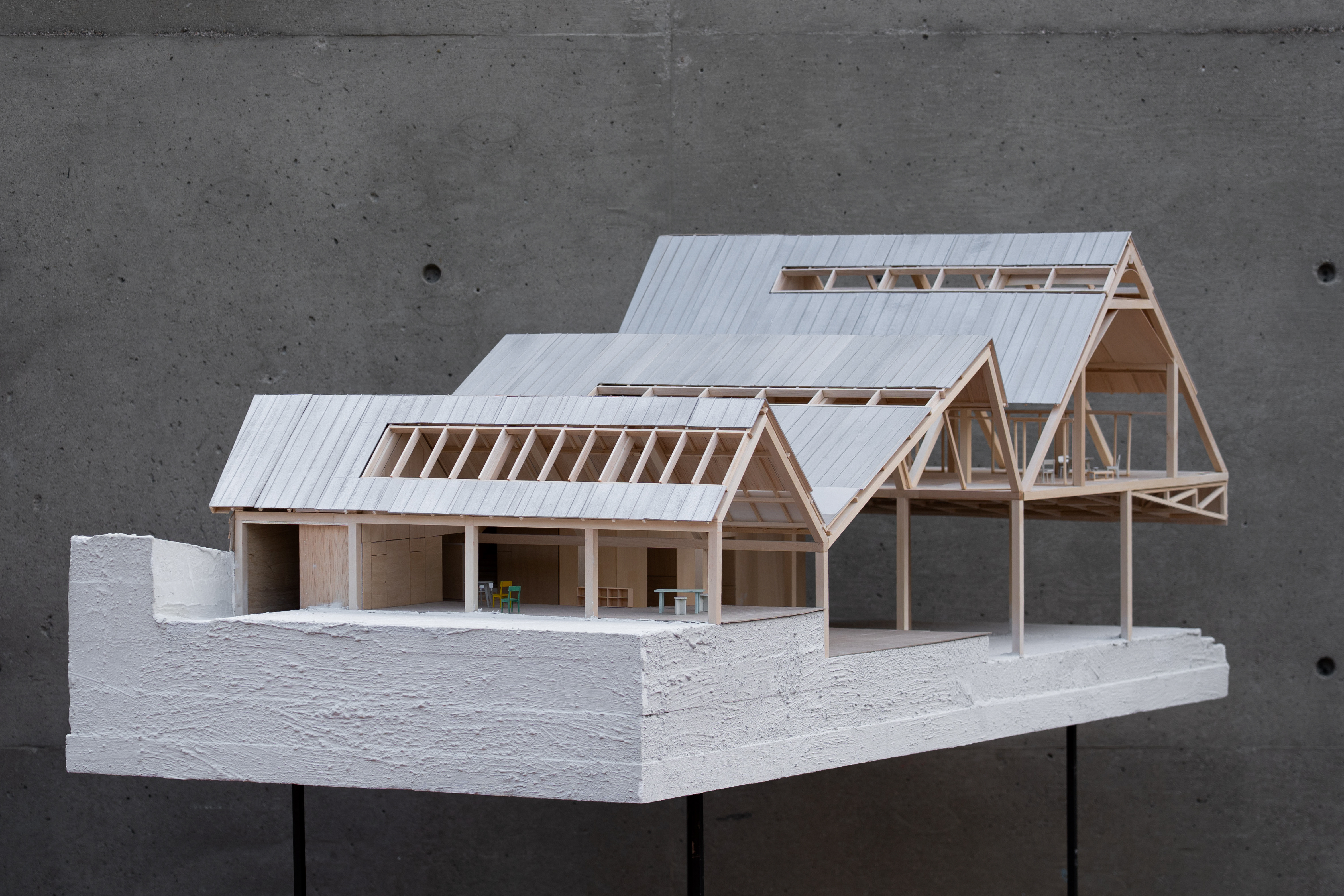
The project proposes a composition of three sequential roof volumes sited on a gentle hillside in rural Connecticut. Drawing from the typological language of the New England barn, farmhouse, warehouse, and even the industrial sawtooth roof, the design explores a hybridized architectural form that negotiates between spectacle and vernacular. From north to south, the program unfolds from domestic to public. The northern volume includes a kitchen, a study room with bookshelves, and an open living area that suits small gatherings and reading. Moving downslope, the center becomes a flexible hall for workshops, classes, and community events. At the southern end, the building opens toward the farmland fields with a tall ground floor that can host exhibitions, farmers’ markets, and civic activities. In warm seasons, rolling shutters open so indoor events extend to a shaded, semi-outdoor porch. Above this level sits a quiet multipurpose room that supports everyday use.
Light is organized in a clear, gentle strategy. The north volume welcomes daylight through clerestories and full-height glazing, creating a familiar daily atmosphere. A narrow slot between the roofs brings soft daylight into the central hall, keeping the space bright and open. The 2nd floor interior in the south volume receives indirect light through concealed clerestories, avoiding glare and maintaining even illumination. Between two roof folds, a small terrace is tucked in as a place to pause, look out, and read the meeting of the roof lines.
Materials and construction are specific. A timber frame provides the primary structure and composite interior vernacular; wood shingles form a continuous elevation on the east and west façades; and along the north and south axis the roofs are built with everyday aluminum panels. Familiar forms remain legible while producing a calibrated ambiguity, allowing moments of spectacle to emerge within the everyday architectural landscape and creating a dialectical spatial dialogue.